Search This Blog

This is default featured slide 1 title

Go to Blogger edit html and find these sentences.Now replace these sentences with your own descriptions.

This is default featured slide 2 title

Go to Blogger edit html and find these sentences.Now replace these sentences with your own descriptions.

This is default featured slide 3 title

Go to Blogger edit html and find these sentences.Now replace these sentences with your own descriptions.

This is default featured slide 4 title

Go to Blogger edit html and find these sentences.Now replace these sentences with your own descriptions.

This is default featured slide 5 title

Go to Blogger edit html and find these sentences.Now replace these sentences with your own descriptions.

Showing posts with label Smoking. Show all posts

Wednesday, May 09, 2012

Smoking, Alcohol and Contraceptives may case Migraine Headaches

Over time, a few theories have been explored as being the cause of migraine headaches. However, people today can attest to the fact that specific things cause migraines in their case.

What Causes Migraine Headaches - The Theories Explored

Back in the 1940s, scientists believed that migraine-headaches were triggered by an initial spasm that partially closed the arteries leading to the cerebrum. This, they believed, caused a decrease in the blood flow to part of the brain, hence the sudden headache and severe pain.

Friday, March 23, 2012

Enabling - When Helping an Alcoholic or Addict Really Isn't Helping

An enabler in most definitions is a person who through his or her actions allows someone else to achieve something. Most often the term enabler is associated with people who allow loved ones to behave in ways that are destructive. For example, an enabler wife of an alcoholic might continue to provide the husband with alcohol. A person might be an enabler of a gambler or compulsive spender by lending them money to get out of debt.

In this fashion, though the enabler may be acting out of love and trying to help or protect a person, he or she is actually making a chronic problem like an addiction worse. By continuing to lend money to the gambler, for example, the gambler doesn’t have to face the consequences of his actions. Someone is there to bail him out of trouble and continue to enable his behavior.

The term enabler is also part of the larger definition of codependency. Codependency at first arose as a definition of adaptive behaviors a person might make if he or she lives with someone with substance abuse or severe emotional problems. A codependent tends to remain so, because he or she adapts to or ignores the behaviors of the ill person. In fact, the codependent often becomes an enabler because it allows one to be involved in fewer conflicts.

For example, one spouse is an alcoholic, while the other is not. Perhaps the spouse who doesn’t have a problem with drinking has stated that she/he will no longer allow alcohol to be consumed in the house. Then the fights ensue. The alcoholic spouse violates the rules again and again.

Eventually, the non-drinking spouse may simply decide that the fights are worse than the person being drunk. He or she caves in on this issue, perhaps even purchasing alcohol for the spouse. In this way, the spouse is the enabler of the alcoholic, and is codependent, acting in unusual ways that continue to allow the spouse to behave in a destructive manner.

Enabler can be a more broad-based term for other forms of abusive and destructive behavior. The wife who refuses to fill out police reports after being abused by her husband enables his continuing to beat her. Thus the enabler often suffers almost as much as the mentally unbalanced or addicted person.

Not all forms of enabling are necessarily negative. A person can be a positive enabler in a child’s life by behaving in certain ways. For example, a father who spends time with his children, listens to them, and lets them know how wonderful and important he thinks they are is likely to enable the children to be confident and happy children. This is an enabler in the best sense of the word.

Tuesday, February 07, 2012

The Psychology of Smoking - Why do People Smoke?

Smoking is one of the most difficult addictions to break. Scientists estimate that cigarettes are more addictive than cocaine, heroin, or alcohol. According to the World Health Organization, smoking kills more people than any disease in the world. With all this information readily available, why do people continue to smoke?

Most people who smoke do so because they can't stop. Nicotine is a highly addictive substance that makes people feel energized and alert. Smokers get a rush after a cigarette, and giving up produces withdrawal symptoms that include difficulty sleeping and cravings. Seventy percent of people who quit smoking eventually start again.

Tobacco advertising also has a big influence on why people smoke. For years, the industry has focused on making smoking glamorous through advertising in movies, television, and billboards. While cigarette advertising is now controlled, its influence can still be felt in the form of free samples, smoking cartoons, and the promise of cool merchandise that can be obtained in exchange for coupons printed on cigarette packs. Many people claim that smoking keeps them thin, but the truth is that smoking reduces the sense of taste, so many people who smoke simply eat less because they don't enjoy food as much.

Smoking also produces psychological dependency. Many people smoke because it helps them relax and cope with difficult situations, or because it gives them confidence. Others smoke when they feel bored. Smoking produces a feeling of satisfaction that's difficult to give up. Finally, people who smoke are usually in denial – they know that smoking is bad, but they convince themselves it's simply "not as terrible as they make it sound."

Smoking is a social activity as well. Many people who smoke do so as a way to start conversations and interact at parties or in crowded places. This is known as "social smoking," and it usually involves alcohol as a complement.

Many teenagers start smoking due to peer pressure. They may also smoke to feel more mature or as a form of rebellion against parental authority. It has been proved that children are also more likely to smoke if their parents do.

Friday, August 26, 2011

Environmental Benefits Of Smoking Electronic Cigarettes

The dangers of global warming and pollution need to be handled right now or it will soon be the Judgment Day for all. Electronic cigarette can be your own way of fighting environment pollution and contributing to the world. You might have read pieces of information where the benefits of electronic cigarette for your own health have been discussed in details. However, this one is about how you will be helping the environment as well as yourself if you shift from tobacco cigarette to electronic cigarette.

1) Save the Ozone Layer with Smoke-free Substance The trouble with the ozone layer has been that it is being continuously perforated with various kinds of smoke, pollutants, gases and other substances from the earth. Electronic cigarette is smoke free. The nicotine in the e-cig is dissolved in about four other liquids, which keeps it diluted. Thus, when you exhale the vapor, all you get is maximum 10% nicotine vapor and the rest 90% is pure water vapor. Smoke from tobacco cigarette goes up in the air, gets mixed in it, and strikes the ozone layer up above. This is not the risk that our environment suffers with when the vapor of electronic cigarette is exhaled by users.

2) Needs No Fire, Save Wood Tons of wood is wasted every year just for the sake of lighting cigarettes with matchsticks. Lighters too use Naphtha or other carcinogenic materials which are not just harmful to the health of the user. Naphtha is a petroleum product, the excessive use of which leads to the emptying of the limited resources of fuel under the earth. Electronic Cigarette requires no fire, no matchstick to light it. It works or rechargeable battery and sensors. You just hold it between the lips and inhale, the e-cig is lighted for the instant. You inhale and once you keep it unused for some moments, it ‘extinguishes' itself to save power.

3) No Garbage, Clean Earth The cartridge or refill of each electronic cigarette lasts up to the puffs you get for 3 cigarettes. This means, you need not keep an ash-tray with yourself wherever you go, or even pollute the surroundings. Each cartridge saves the garbage up to three times than that with tobacco cigarette. Then again, the cartridge is only the ‘filter' part that you need to dispose off as it empties itself. The battery or the white part remains and it is rechargeable. Electronic cigarette saves environment from garbage disposal pollution.

4) Save Money, Save Yourself From Getting Poor Electronic cigarette can help you save up to $1000 per year! Tobacco cigarettes cost $4-$5 per packet. While electronic cigarette costs you $1.5-$2.5 that will last to till the time that would a pack of tobacco cigarette do. It saves you from burning a big hole in your pocket. Electronic cigarette vapor is a safe and non-smelly exhaled vapor that is safe for passive smokers.

Friday, July 08, 2011

Women may have yet another reason not to smoke


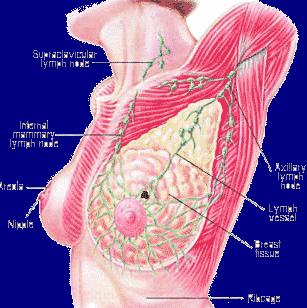
In addition to causing lung cancer, heart attacks and strokes, a new study suggests that smoking also may slightly increase the risk of breast cancer.

Scientists have known for decades that tobacco causes lung cancer and at least nine other types of tumors, according to the National Center Institute. Worldwide, smoking kills 5.7 million people a year, according to the World Health Organization.

But smoking's relationship to breast cancer have been less clear, with studies showing mixed results, according to a study in today's Archives of Internal Medicine.

The new study is believed to be the largest ever to address the question, drawing on the records of the long-running Nurses' Health Study, including more than 111,000 women followed from 1976 to 2006.